


Introduction: Choosing an anti-choking device for home begins with one rule: standard first aid and emergency calling come first, and the device is a second-line backup after those steps. For a home, the useful questions are practical: Is it manual and foldable? Does it cover every face size in the household? Can a panicked caregiver use it without a long set of instructions?
A household with a young child and an older adult may want that backup close at hand, but the decision should start with the type of device, not the brand. Hospital suction machines, electric units, and handheld kits are often compared side by side even though they belong in different settings. The home selection standard should match the response order a family can actually follow under stress.
Why Standard First Aid Comes Before Any Anti-Choking Device for Home
1. What Standard Choking Response Looks Like in a Home Emergency
In a home emergency, the first minutes belong to recognition and action. If the person can still cough, encourage coughing. If they cannot breathe, speak, or cough, call the local emergency number and begin back blows between the shoulder blades, followed by abdominal thrusts. Repeat the cycle until the object clears or professional help arrives. For a child, use age-appropriate adjustments and force. Mayo Clinic's first aid guidance describes this sequence because it can start immediately and needs no equipment. The sequence matters because it shapes every later purchase decision. A device that sits in a drawer cannot replace the immediate actions a caregiver can take with their own hands. The device becomes relevant when standard measures have been attempted and emergency services are already on the way. That order keeps the home plan realistic and keeps the device in its proper role.
2. Why a Manual Suction Device Is Only a Second-Line Home Backup
The FDA places anti-choking suction devices after established choking rescue protocols as a second-line option. A home device should therefore be a manual negative-pressure pump rather than a powered clinical suction machine. A manual pump has no motor, no power supply, and no suction settings. Pressure builds when the caregiver pulls the handle and expands the pump body against a sealed mask. This is why an anti-choking device for home should be understood as a backup after standard first aid, not as a replacement for back blows, abdominal thrusts, or the Heimlich maneuver. Manual negative pressure also gives the home user a different kind of control. The caregiver creates suction through a direct mechanical pull, so the action is visible and repeatable. Electric clinical suction units belong to trained medical settings with power, tubing, and ongoing monitoring. A foldable manual device fits a household because it can stay compact until needed, then open into a full suction chamber during the emergency.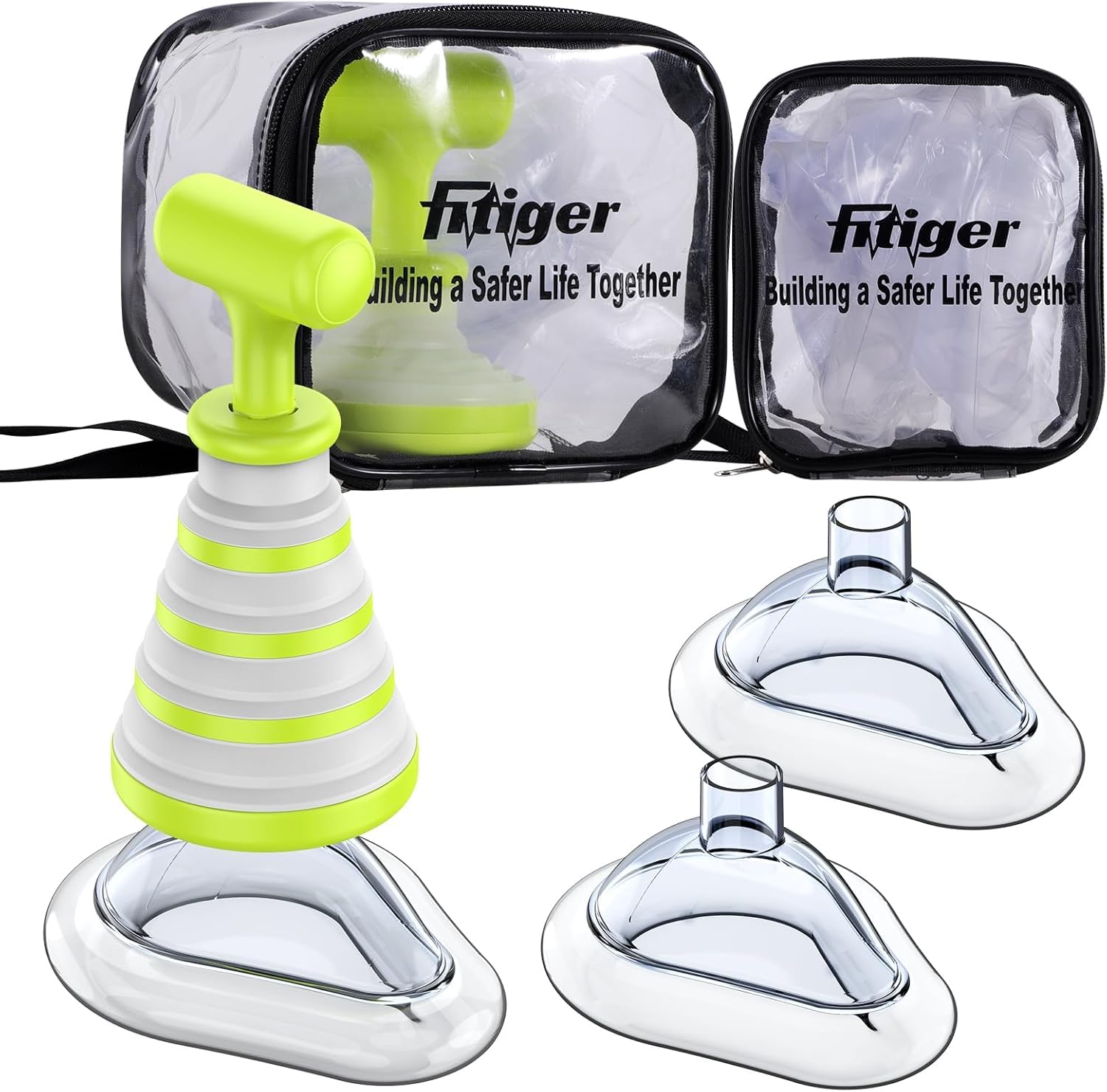
How to Match an Anti-Choking Device to Home Caregivers and Family Members
Consider a household with two adults, one child, and a grandparent who helps several afternoons a week. The practical question is whether one foldable kit is enough as a backup. The Fitiger FoldPumpVac Home Kit includes one folding manual negative-pressure pump, one travel bag, one adult mask, and one child mask. That single box covers both adult and child face sizes in the example household. From there, the decision is about people rather than quantity. If the adults who are usually present can all use the device, one kit may cover the home. If the child and an adult are often in separate places with different caregivers, a second unit is easier to justify. Capability matters more than count. A two-step Place-and-Pull action keeps the sequence short for a babysitter or visiting relative to remember after one demonstration. The child mask is not intended for neonates or very young infants, so a household with a newborn should follow medical guidance for that case. If mask sizing is uncertain, confirm with the seller before you rely on the kit. The goal is not to build a mini hospital at home. The goal is to choose a second-line tool that the people already in the house can recognize, reach, and use after standard first aid has begun. A home with one regular caregiver and one child may need only one kit near the main eating area. A multi-generational home with several caregivers, different floors, or frequent visitors may need more than one unit because the first person on scene changes from day to day. This is a judgment about response coverage, not about buying the largest package. The device should match the faces in the household and the hands most likely to use it.
How Mask Fit and Pump Design Work in a Foldable Home Choking Rescue Kit
Mask fit is easy to overlook. Negative pressure only builds when the mask seals around both the mouth and the nose. An adult mask will not seal properly on a small face, and a leaking mask wastes the seconds that matter. That is why a home kit should include both an adult mask and a child mask instead of one universal size. Two masks in one box mean no one has to improvise during an emergency. Pump design shapes the order a nervous caregiver follows. A folding pump body keeps the kit compact for storage and then extends into a full suction chamber when the handle is pulled. A one-way air release design keeps airflow moving in the intended direction instead of pushing material back down the airway. A clear observation chamber lets the person helping see whether anything has come out, so they can decide whether to continue or hand over to emergency responders. Fitiger publishes a brand-level lab suction range of 19–42 kPa across its devices. Treat that figure as a brand-level lab range, not a model-specific outcome or a promised result in any single rescue. A choking rescue device for home should shorten the decisions a caregiver faces, not add to them. The combination of mask coverage, a foldable manual pump, a one-way air release, and a clear chamber gives the household a practical second-line option that can stay stored until standard first aid and emergency calling are underway.
Conclusion
For a home, the right anti-choking device is the one that fits the response order you already have. Standard first aid and emergency calling come first, and the device fills the gap after those steps. Look for a foldable manual negative-pressure form you can store without extra preparation, mask coverage for every body size in the house, and a two-step action a nervous caregiver can complete. The Fitiger FoldPumpVac Home Kit is built around that combination, with an adult mask, a child mask, and a folding pump in one box. If you are unsure which mask size suits your household, contact the support team before ordering.
FAQ
Q:Is an anti-choking device for home meant to replace the Heimlich maneuver?
A:No. A home anti-choking device is a second-line backup that comes after standard first aid, including back blows and abdominal thrusts, and after emergency services have been called. Those steps remain the first response because they need no equipment and can be started immediately. A manual suction device adds another option when standard measures have not cleared the airway and professional help is still on the way.
Q:What should a family look for in a foldable manual choking rescue kit?
A:Look for a manual negative-pressure pump that folds for storage, mask coverage for each body size in the household, and an action simple enough to complete while panicked. A two-step Place-and-Pull motion, a one-way air release design, and a clear observation chamber all support that. A compact kit that lives where you can reach it in seconds is worth more than a larger device that stays in a closet.
Q:Do I need both adult and child masks in a home anti-choking device kit?
A:If children live in or visit the home, yes. Negative pressure depends on a tight seal around the mouth and nose, and an adult mask will not seal properly on a small face. The FoldPumpVac Home Kit includes one adult mask and one child mask. The child mask is not intended for neonates or very young infants, so check with the seller if you need coverage for a newborn.
Sources / References
Choking: First aid - Mayo Clinic
Update: FDA Encourages the Public to Follow Established Choking Rescue Protocols
Health Products Compliance Guidance | Federal Trade Commission


