


A practical guide to viewing three real EasyPumpVac observation excerpts, separating visible handling from inference, and checking technical questions against the final instructions.
Last updated: October 5, 2026
A simulated-use video of a choking rescue device can show hand positions, separate components, and nearby materials. It cannot by itself establish a complete procedure, a person's training, a successful seal, or a clinical rescue outcome. Choose one handling question, compare the visible frame with the final instructions, and leave anything outside the image unresolved. That gives you a useful question to ask without judging the participant's competence.
The three public EasyPumpVac observation clips run for nine, 66, and 46 seconds. Fitiger supplies them as continuous excerpts at original speed with on-site audio removed. This guide uses their published descriptions and frames checked at multiple time points. The timestamps locate visible material in those excerpts; they are not measurements of performance.[1]
Choose one question about the choking rescue device video
Open the final instructions for the exact model beside the recording. Identify whether you want to understand the mask connector, contact at the face, the two hand roles, or the preparation materials. These are separate things to look for. Trying to judge every part of a procedure in one viewing can leave you with a vague impression and no clear question to resolve.
The public page identifies FAC01-B as the representative device in the supplied simulated-use evaluation covering FAC01-A and FAC01-B. It does not supply FoldPumpVac study recordings. Keep that model scope attached to what you see. A similar-looking action in an EasyPumpVac clip does not become evidence about a different model.[1]
| Excerpt | A useful viewing question |
|---|---|
| Observation 1: 9 seconds | Which hands are visible near the mask and device? |
| Observation 2: 66 seconds | How do contact and component position appear at different points? |
| Observation 3: 46 seconds | What preparation is visible before the device is at the manikin? |
Watch the published excerpt first, then pause at a moment relevant to your question. Write down a visible object or position before adding an interpretation. If a hand blocks the connector, record that the connector is obscured. Do not fill the gap with what the manual says should have happened; instructions and observation are two separate sources.
Observation 1: Read a short handling excerpt in context
The nine-second excerpt begins with the mask and device already at an adult torso manikin. In frames checked at the beginning and around two, four, and six seconds, one hand is on the device and another is near the mask. The device's extension differs across those views. Earlier assembly and placement are outside this short excerpt, as the public description also states.[1]
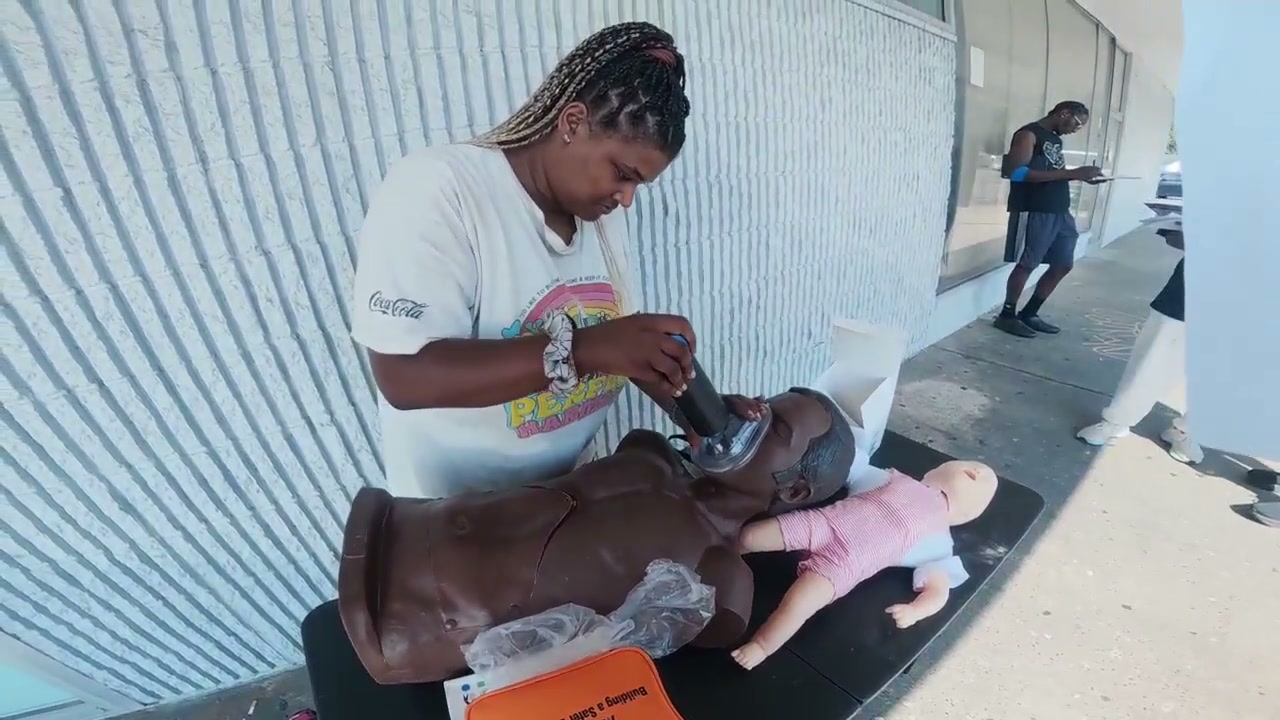
Around eight seconds, another hand is visible in the foreground near the device, and a sheet of paper occupies part of the right side of the frame. This matters because the recording contains more context than the operator and equipment alone. The silent image cannot tell us what the other person said, meant, or was doing before that moment. That later moment is described here but is not the still shown above.
A useful note would be: "Another hand is visible around 00:08; the associated conversation is unavailable." Calling that person a trainer, calling the gesture a correction, or concluding that the participant worked without help would go beyond the visible record. Keep the description specific enough that someone else can find the same moment and discuss the same question.
To understand the hand roles, turn to the EasyPumpVac instructions. They assign one hand to hold the mask while the other pulls the grip. That written requirement gives you something precise to look for: distinguish the mask-holding hand from the hand on the movable part. A camera view may show their locations while leaving the quality of either action unresolved.

The Fitiger How It Works information provides the route to device tutorials. Use it together with the final manual when a clip leaves a handling question unanswered. A short observation is useful for identifying that question; it does not contain the complete eligibility checks, positioning requirements, or preparation sequence.
The infant manikin beside the adult torso is a separate visible object. It does not establish an infant indication. The final EasyPumpVac and FoldPumpVac manuals specify patients at least one year old and operators at least eighteen years old. A viewer must keep the patient requirement and operator requirement distinct, regardless of the props or people appearing in a recording.
Observation 2: Compare mask contact across the longer excerpt
At the start of the 66-second excerpt, the participant holds a sheet beside the adult manikin. By the sampled view around eight seconds, the device and mask are at the manikin's face. Frames at roughly 16, 24, 32, and 40 seconds show the participant handling the device while the other hand remains near the face or mask. These observations describe visible positions at those times, not every movement between them.
Around 48 seconds, the still shows one hand on the extended device and the other at the transparent mask. Views around 56 and 64 seconds show further changes in hand and device position. The public description identifies repeated handling within this continuous excerpt. Neither the samples nor the displayed duration supply a validated attempt count, a recommended rhythm, or a measurement of suction.[1]
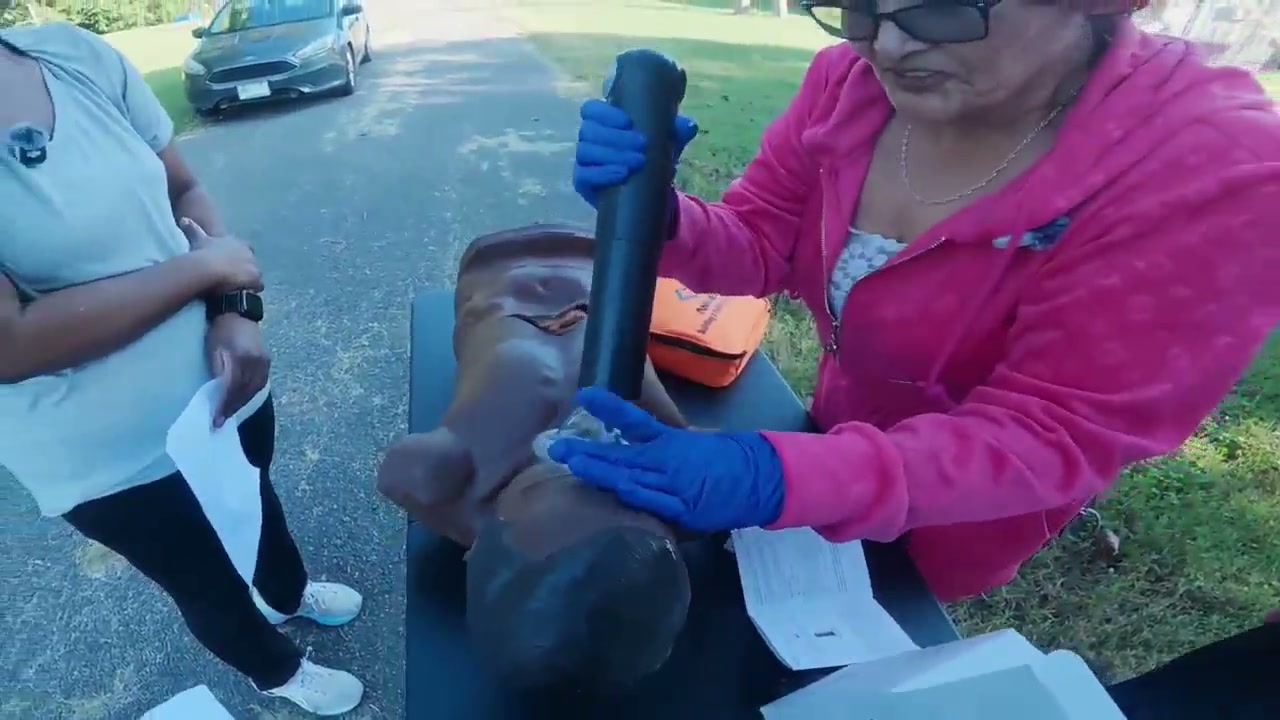
When comparing two paused views, use the manikin's nose, mask rim, and device connection as reference points. A change in camera angle can change how far apart those features appear. Avoid treating image distances as measurements of device travel or applied force.
For a second viewing, follow one feature at a time. First locate the hand near the mask. Then examine where the connector enters the device. If you lose sight of a feature, note the obstruction or camera angle. That method helps you state a clear question, such as whether the whole mask edge is visible, without converting a partial view into a claim about an airtight seal.
The technical distinction is between two connections. The mask connector attaches to the main unit; the cushion meets the face around the mouth and nose. A connector can appear attached while the camera still cannot establish face contact around the entire edge. Conversely, seeing the mask resting on the manikin does not show that the connector was installed according to the instructions.

The EasyPumpVac final manual specifies alignment, firm insertion with a back-and-forth twist, and a fully seated connection. It says not to use the device if insertion offers little resistance or the mask becomes loose after installation. These are manual requirements to understand in advance. The video cannot measure insertion resistance, and the article does not infer it from the participant's motion.
Review the model's connector and face-seal instructions if those two interfaces remain confusing. Keep your note tied to the precise issue: connector attachment, mask selection, face contact, or hand role. That is more useful when seeking clarification than treating every adjustment as the same kind of action or labeling it an error.
Observation 3: Notice preparation and the simulation setting
The 46-second excerpt includes more visible preparation than the first one. At the beginning, the adult manikin, orange pouch, printed material, and packaging are on the table. In the sampled views around six and twelve seconds, the participant holds the transparent mask while the main device is visible separately on the pouch. People nearby also hold papers.
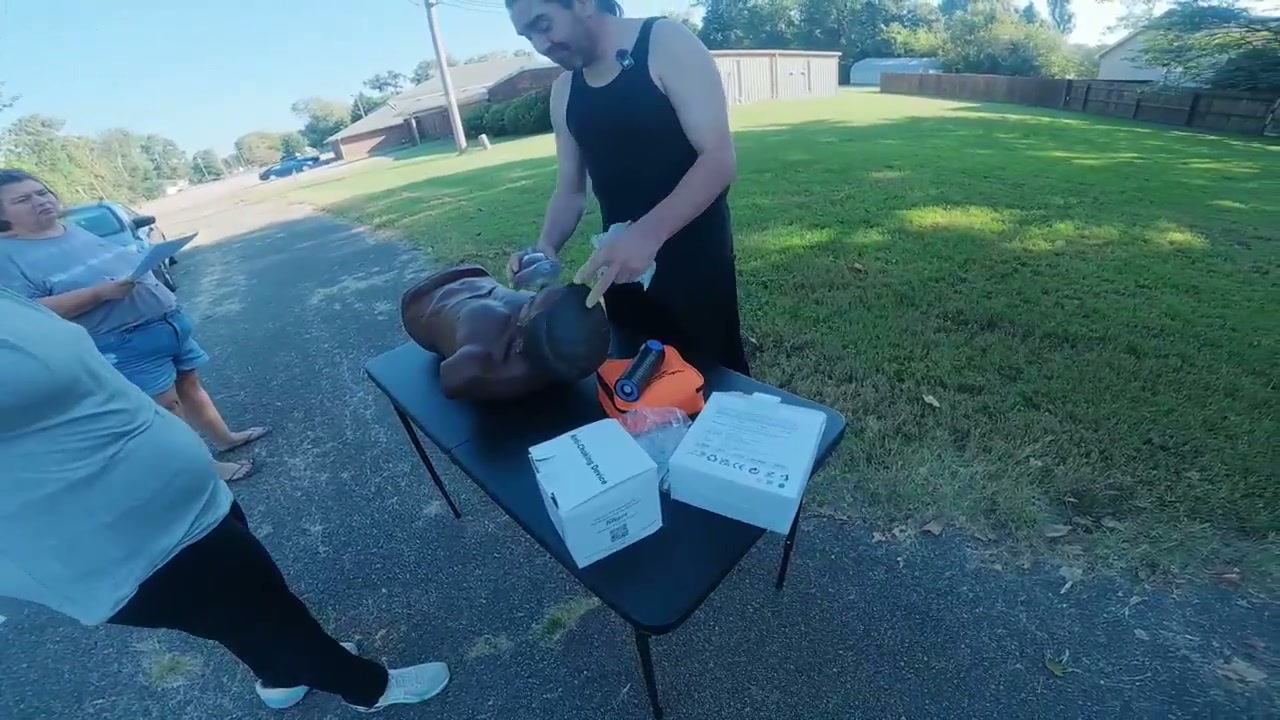
By the sampled view around eighteen seconds, the device is at the manikin's face. Later samples around 24, 30, 36, 42, and 45 seconds show handling at the face. The interval between two sampled images does not reveal every intervening action. In particular, the selected images do not independently document a complete connector installation or the checks that preceded the handling.
This makes the excerpt useful for a preparation question: can you distinguish the separate mask, device, instructions, and packaging before they are used together? Read their names in the final manual and identify which component each picture represents. Do not infer a person's understanding merely because printed material is present. Its presence and the participant's understanding are different observations.
The printed words in these frames are not consistently legible enough to serve as an instruction source. Read the current manual directly rather than transcribing a blurred sheet or guessing a diagram from the recording. If a label or component name differs from your own kit, resolve that model or version question before trying to follow the sequence.
Also separate the simulation arrangement from the patient position in the instructions. These recordings use an adult torso manikin on a table. The final device manual depicts a person lying on their back and specifies a hard surface. A tabletop training setup does not instruct a caregiver to lift a choking person onto a table or to reproduce the camera's viewpoint.

The device instructions also exclude patients with head, neck, face, or back trauma. Do not improvise a head or body movement from observation footage when injury is suspected; follow emergency guidance. Learning the model's limitations belongs before a crisis. A tabletop scene cannot answer whether the device is appropriate for a particular patient or situation.
The public description states that later discussion is omitted and that the excerpt does not establish independent task completion. Preserve that boundary when discussing the ending. A video stopping is simply the end of the available excerpt. It does not tell the viewer whether a real obstruction was removed, whether a task was accepted, or what anyone said afterward.[1]
Make viewing notes that lead to an answer
Use three short entries for each question: the moment you looked at, the feature you could actually see, and the source needed to resolve what remains unclear. This keeps a discussion focused. It also lets another caregiver return to the same point without relying on a remembered impression of the whole video.
| Visible feature | Useful question for follow-up |
|---|---|
| A hand partly covers the transparent mask | Which part of the mask contact is visible, and which part is hidden? |
| The device is already assembled when a clip begins | Where does the final manual explain connection and the loose-connector stop condition? |
| A separate component appears in a preparation frame | Which named part is it, and what does the manual say about selection or replacement? |
| A paper or another person is present | What does the image show, and which communication or instruction remains unknown? |
Keep playback speed at the published setting when considering the order of visible actions. Pause to inspect a feature, but do not use pauses, slowed playback, or excerpt length to create performance measurements. The recordings have already been edited to remove audio and select continuous portions. A household discussion cannot reconstruct the missing context by repeatedly watching the same frames.
The broader guide to human-factors evidence for caregivers explains how the public summary relates to device instructions and clinical evidence. Use this article for the narrower task of reading what is visible. Neither article grades participants or supplies the confidential report, detailed methods, or underlying study data.
Follow up through safe familiarization and first-aid training
Any permitted hands-on familiarization belongs on an appropriate training manikin under the final instructions. Never apply suction to a healthy person. Plan replacement masks because they are single use, including during training. If foreign material enters the main unit, the manuals require discarding the device. A practice session should not leave used supplies mistaken for emergency-ready supplies.
Keep first aid at the center of the household plan. FDA recommends established choking protocols first and describes devices as a possible second option after those protocols have not worked. Its statement does not authorize a particular product. AHA/AAP pediatric guidance says evidence is insufficient to recommend suction-based airway clearance devices in infants and children; safety and effectiveness have not been established.[2][5]
During severe choking, activate 911 and begin the appropriate standard response; when another person is available, have them call while care starts. If the choking person becomes unresponsive, begin CPR with compressions and follow dispatcher guidance. Review the age-appropriate family response plan with current first-aid training. Watching or searching for a recording must never postpone emergency action.[3][4][5]
Frequently Asked Questions
Are the public EasyPumpVac observation videos complete device tutorials?
No. Fitiger's three public EasyPumpVac videos are selected continuous simulated-use excerpts with audio removed. Use the complete final instructions and dedicated model tutorials for correct operation.
Do EasyPumpVac video timestamps show attempts or rescue success?
The timestamps locate moments in Fitiger's edited EasyPumpVac observation excerpts. They are not task-completion times, a recommended attempt count, or evidence of a successful rescue. This article describes sampled visible positions without reconstructing the intervals between them.
Does a silent EasyPumpVac recording show independent use without guidance?
No. Removing audio removes spoken context. A visible person, paper, or hand does not establish the content or absence of instructions, prompts, or assistance.
Can I practice with a choking rescue device on a family member?
Do not use a choking rescue device to apply suction to a healthy person. Use an appropriate training manikin only as permitted by the final instructions, and respect the single-use mask and device-disposal requirements.
Resources
Fitiger: Human Factors & Usability - Supports the authorized public clips, model scope, original-speed and audio-removal disclosures, and stated excerpt boundaries.
FDA: Choking Rescue Protocols Safety Communication - Supports standard protocols first, the limited second-option statement, advance device familiarity, and avoiding delays; updated March 4, 2026.
American Red Cross: Adult and Child Choking - Supports emergency activation, standard choking care, and CPR after unresponsiveness.
AHA: 2025 Adult Basic Life Support - Supports current adult choking and CPR priorities.
AHA and AAP: 2025 Pediatric Basic Life Support - Supports pediatric choking and CPR priorities and the stated evidence limitations of suction-based airway clearance devices.
Observation and instruction note: This article reviewed frames at multiple time points from the three authorized public excerpts. It does not claim continuous frame-by-frame analysis. Technical handling statements use the final EasyPumpVac and FoldPumpVac manuals, V1 dated July 23, 2026. Three body images are newly extracted real frames; three are original manual drawings. The separate cover is AI-created conceptual art. No confidential study methods or numerical results are reproduced.
Medical and Evidence Disclaimer
This manufacturer-affiliated educational article is not medical advice, certified first-aid instruction, or an independent clinical review. Use current American Red Cross/AHA guidance, emergency dispatcher instructions, and the complete instructions for the exact device. Simulated handling and selected images do not establish clinical effectiveness, individual competence, superiority, or FDA clearance or approval. In a choking emergency, do not delay standard care, emergency activation, or needed CPR to watch videos or prepare equipment.


