A school is not ready because a device exists somewhere on campus. Readiness means staff can recognize severe choking fast, start first-line action immediately, reach second-line backup without confusion if standard measures fail, and hand the scene off cleanly to EMS. Procurement and funding only matter when they strengthen that system.
What is School airway safety
Before choosing equipment, review Fitiger's anti-choking device buyer evidence checklist for FDA wording, testing, seller traceability, and kit-selection questions.
School airway safety is not one purchase, one cabinet, or one annual training. It is a chain of decisions made before an emergency starts: where exposure concentrates, who acts first, what staff rehearse, where backup is staged, how the district classifies the purchase, and how leadership explains the need in budget and grant language. In 2026, the first-line sequence is clearer than it was a year ago, which leaves less room for product language to blur response language.
The American Heart Association's 2025 algorithm for responsive adults and children with severe foreign-body airway obstruction still uses repeated cycles of 5 back blows followed by 5 abdominal thrusts until the object is expelled or the victim becomes unresponsive. FDA's March 4, 2026 safety communication says established choking rescue protocols should be used first, and that anti-choking devices may be used as a second option if standard measures are unsuccessful. The De Novo order for DEN250012 defines the FDA-authorized category under 21 CFR 874.5400, product code QXN, as a suction anti-choking device used as a second-line treatment after unsuccessful use of a BLS choking protocol in victims with complete airway obstruction. That sequence belongs in training, placement, procurement language, and family-facing communication.
A real plan does not flatten the whole school into one generic environment. Cafeterias, classroom snack time, special programs, transportation areas, field trips, after-school rooms, and event spaces behave differently. Noise changes. Staffing changes. Room access changes. Nurse-office availability may disappear after dismissal. A plan that works at 12:10 p.m. can fail at 4:15 p.m. when the only adults nearby are after-school staff, a coach, or a bus aide.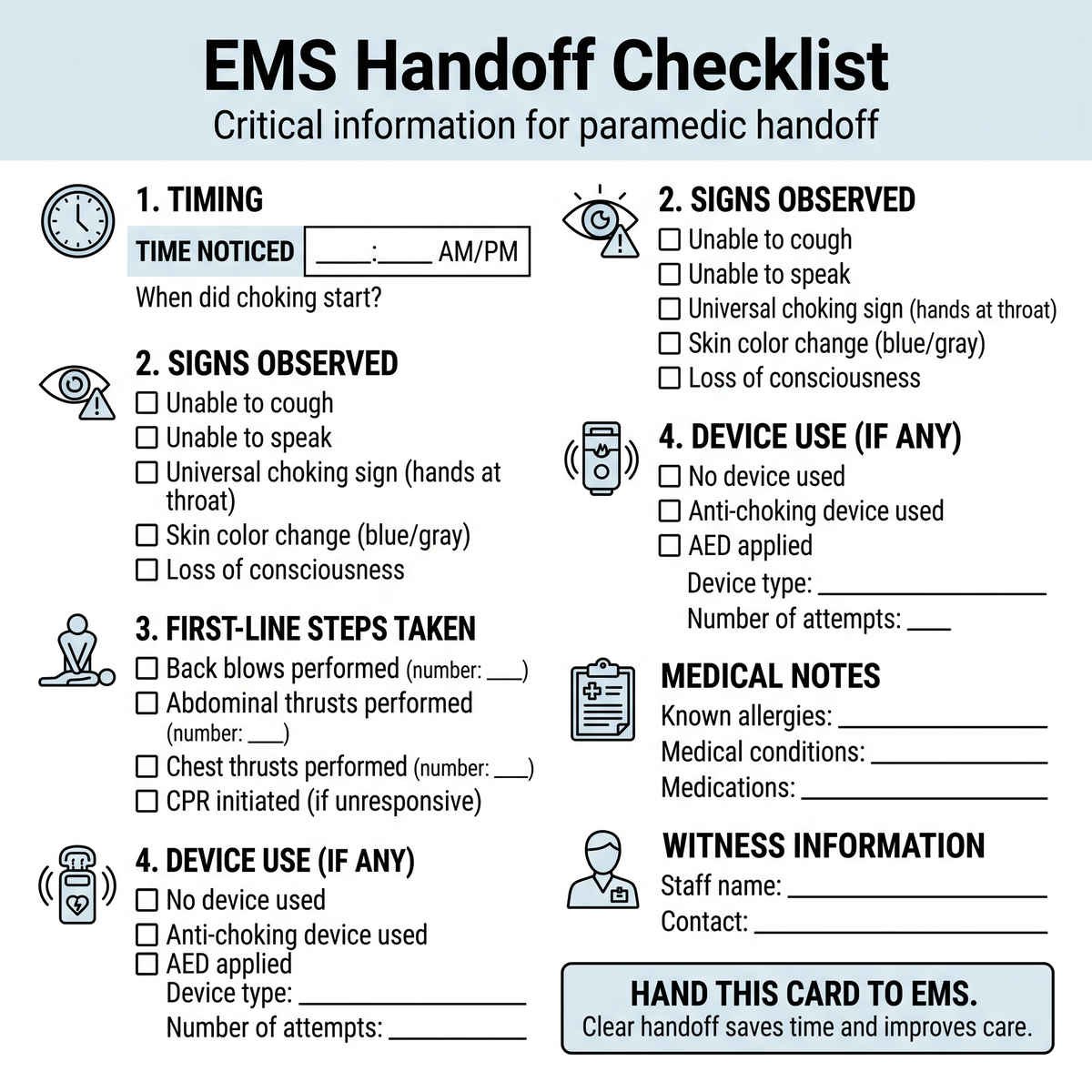
Readiness means severe choking is recognized quickly, first-line action starts without debate, the right person calls 911, someone clears space, and any second-line backup is reachable without guessing if standard measures do not work. The scene stays organized enough for EMS handoff. That is the standard.
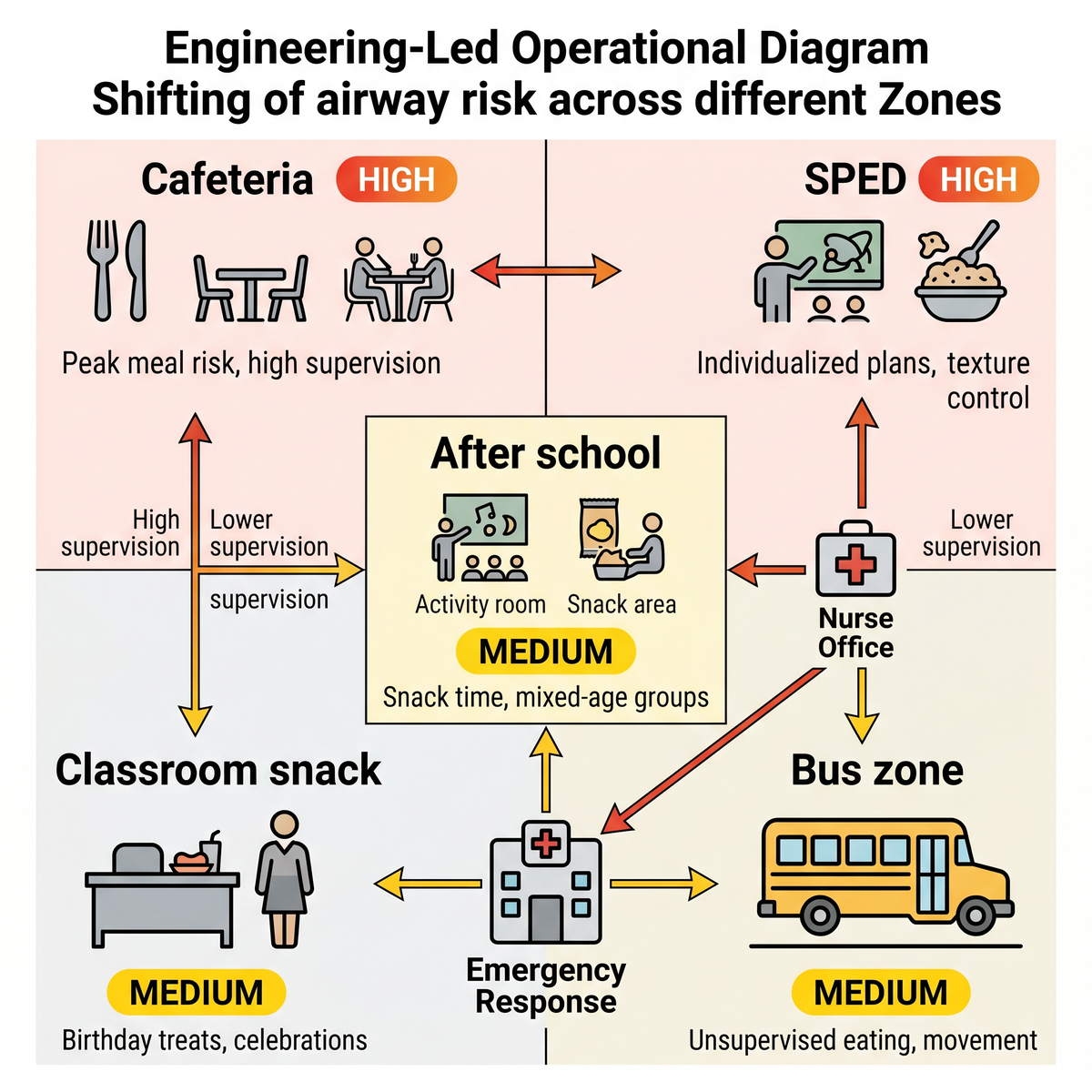
Most campuses already know their friction zones. Lunch periods combine food, movement, crowding, and distraction. Classroom celebrations add rushed eating and uneven supervision. Special education settings may involve wheelchair positioning, transfer limitations, sensory distress, or students who cannot signal airway distress in typical ways. After-school programs create a different set of gaps: fewer adults, thinner supervision, different room access, and staff who may know students less well than the daytime team.
Schools need staff who can recognize severe airway obstruction and begin established first-line action immediately. A second-line tool does not replace that. It does not compensate for weak training, weak supervision, or vague role assignment. It enters later in the chain, and FDA's March 4, 2026 safety communication is explicit that unpacking and assembly can delay care if teams let the device compete with the first move.
Keep that sequence visible everywhere. Training materials should reflect it. Placement decisions should reflect it. Procurement language should reflect it. Family-facing communication should reflect it. The district does not need to pretend a second-line device is the whole answer. It needs to show where the second path fits if the first path does not work.
Placement decisions work best when administrators walk the real campus instead of trusting a tidy building diagram. Where do students actually eat. Which adults are physically closest. Which doors lock automatically. Which zones stay active after dismissal. What is the shortest path to help that does not require someone to leave a student alone or cross the whole building.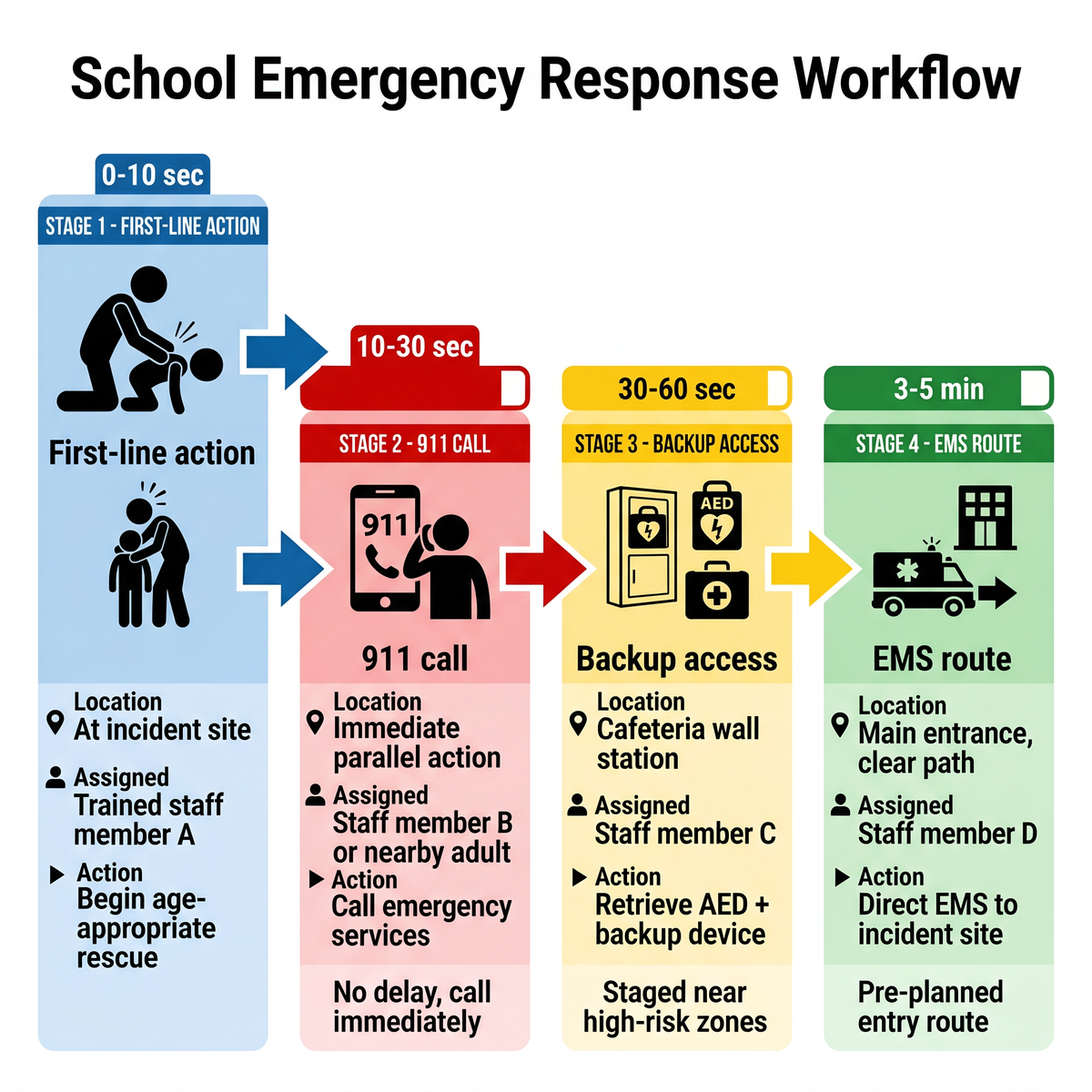
On many campuses, the cafeteria, nurse's office, front office, special-program rooms, gym or after-school zones, and field-trip or transport kits all need different answers. Good placement is not storage. It is access under pressure. A second-line device staged in a locked room on the wrong side of the building may satisfy inventory control and still fail the room where the emergency starts. FDA's own warning about unpacking and assembly delay makes that an operational problem, not a stylistic one.
California's AB 645 fits into this larger 2026 shift. The chaptered text requires prearrival medical instructions for airway and choking emergencies to be approved by the local EMS agency medical director and implemented under local EMS agency protocols. That does not tell a school where to wall-mount or stage backup, but it reinforces the larger pattern: airway emergencies are moving toward more explicit operational design, not less.
A practical three-role model still works because it keeps the room from collapsing into crowd behavior. One adult stays with the student and initiates the first-line response. One adult retrieves staged backup if standard measures are unsuccessful. One adult calls 911, clears space, and guides responders. Schools can rename the roles. They still need the functions.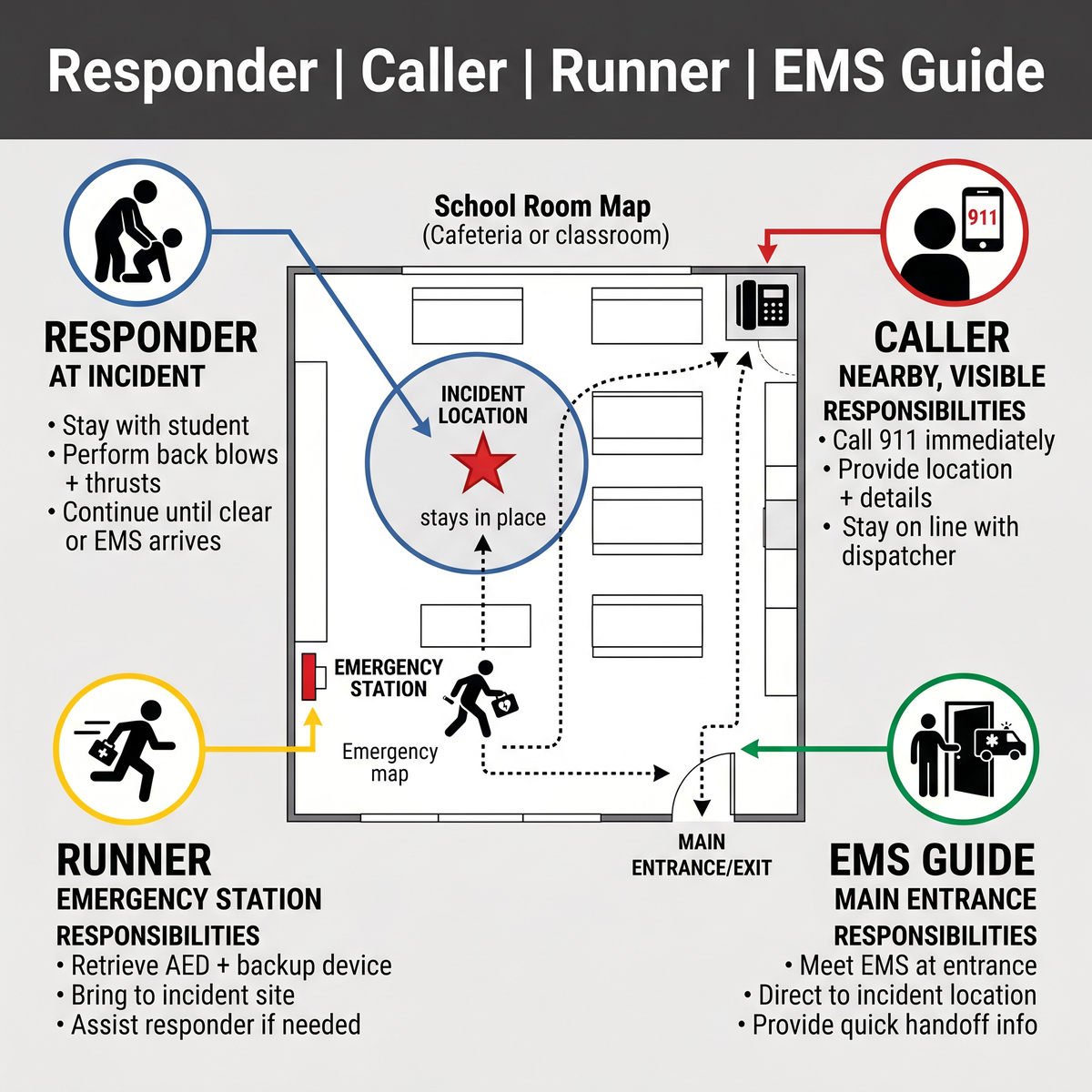
Under stress, vague goodwill is not a plan. Named roles are. Role cards, quick scripts, and plain-language reminders are what keep the chain alive when substitutes are covering, the nurse is elsewhere, or after-school staff are running the room.
Aspirational training plans do not survive October, January, substitute turnover, or event season. Schools need a cadence that survives the calendar. Short monthly drills still make sense because they respect the school year and keep the sequence visible: who recognizes severe choking, who starts first-line action, who calls 911, who retrieves backup if standard measures fail, and how adults move through the room.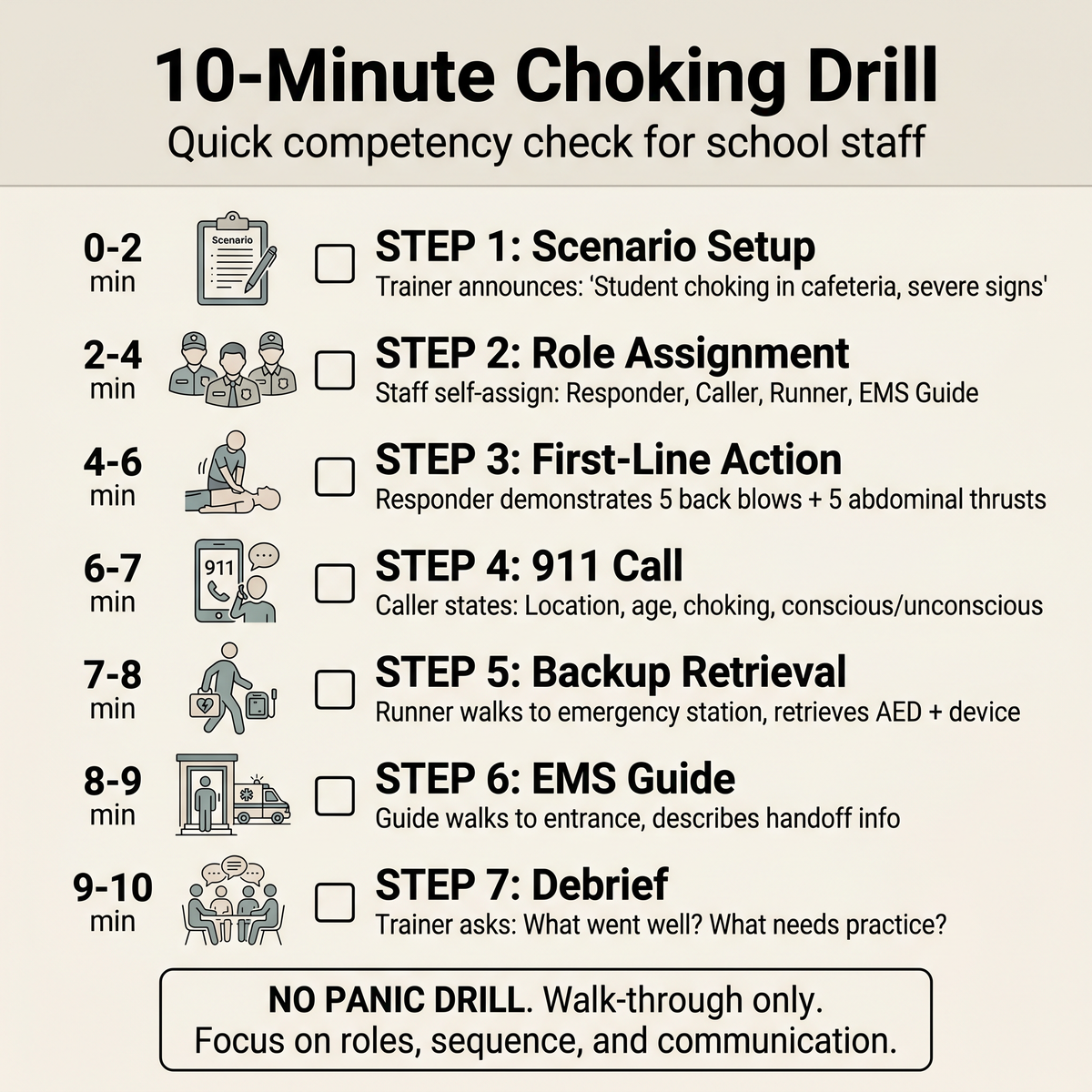
A cafeteria walk-through each term, role refreshers before major events, and a simple substitute script usually do more than one large annual training that nobody remembers. Staff rosters drift faster than equipment locations. Room use changes faster than policy binders. Practice has to keep up.
Many school-safety delays are administrative. The campus may agree the risk is real. The slowdown begins when nobody is sure how to classify the purchase, who signs off, or what the packet needs to show.
A well-prepared district packet should not read like a product pitch. It should read like an operating design: the campus use case, placement logic, training cadence, approximate unit cost, the reason the item belongs inside a readiness plan, and the fact that first-line action remains first. Finance teams move faster when the request arrives as a structured safety system instead of a vague request to buy a product.
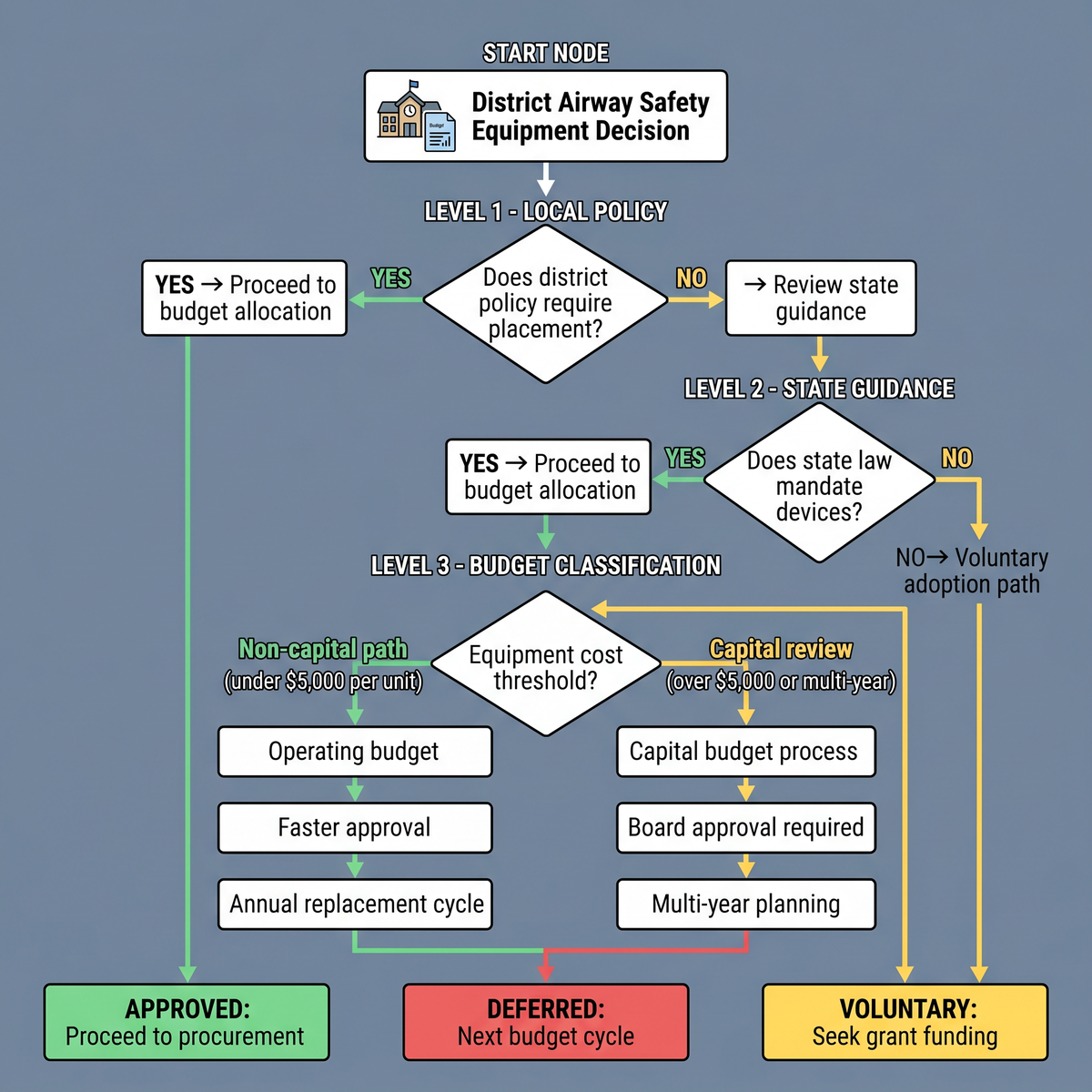
District budgeting shapes speed. Texas teams often start by asking whether a lower-cost airway-readiness purchase fits current district interpretation of FASRG and local capitalization policy for non-capitalized supplies or equipment. District teams should start with current district rules, current TEA guidance, and current business-office review before routing the request into the wrong approval lane.
California teams often have a cleaner distinction between non-capitalized equipment and capitalized equipment, but local approval practice still controls the final route. The lesson is the same in both states: delayed classification is still delay. A district can agree on the need and still lose weeks because the request entered the wrong administrative channel.
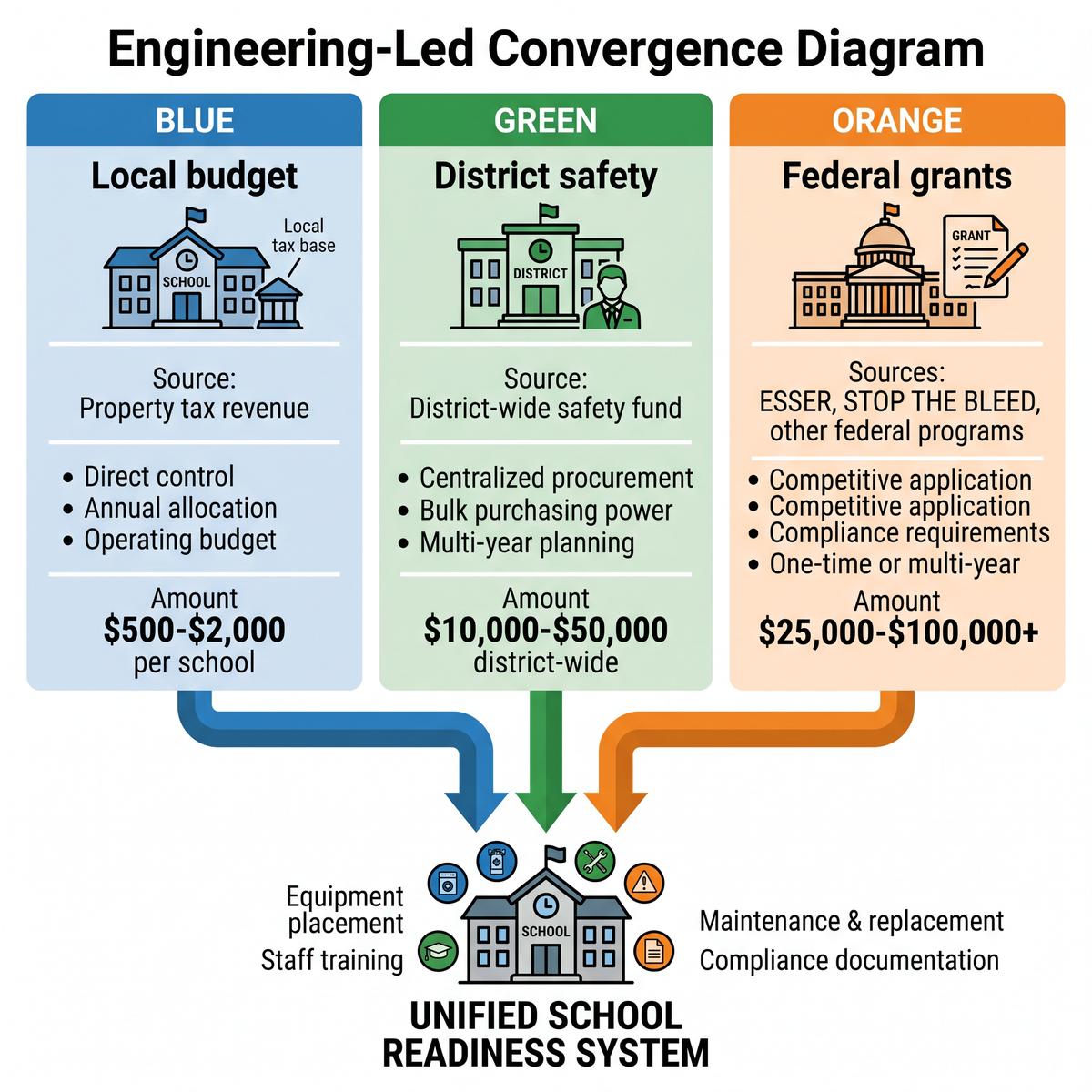
Not every school needs the same funding path. Some districts will handle airway readiness through local operating budgets. Some will fold it into a broader campus safety plan. Some will look at state and federal opportunities. The work starts in the same place either way: define the readiness gap, define the operating environment, define the training and placement plan, then match the funding path to the work.
Federal pathways need to be described carefully. The COPS School Violence Prevention Program says up to $73 million was available in FY25, with awards up to $500,000 and a 25 percent local cash match. The STOP School Violence program supports broader school-safety work through violence-prevention, training, and reporting frameworks. Neither should be treated as an automatic approval path for any single medical-device category. Districts may include airway-readiness work inside a broader operational school-safety package when the request is grounded in training, communication, staged response, and documented on-campus delay.
|
Funding Path |
What it can realistically support |
What districts still need to prove |
|
Local operating budget |
Fastest path for lower-cost readiness purchases, drills, signage, and room-level staging |
Placement logic, training cadence, and why the item fits the campus response design |
|
District safety budget |
Broader integration with emergency planning, after-school readiness, and transport workflow |
Cross-campus risk map, role ownership, and evidence that the purchase is not a stand-alone object |
|
Federal school-safety grants |
Larger packages tied to communication, training, response, and documented delay |
A credible operating story, allowable-cost fit, and defensible program framing rather than a single-device request |
Grant reviewers and district approvers do not need inflated certainty. They need a credible operating story. Where does delay happen on this campus. Who recognizes the emergency. Who starts first-line action. Who calls 911. What changes after dismissal. What happens in the cafeteria, in special programs, on a field trip, or on a bus. Where is the second path if standard measures fail. Districts that can answer those questions in plain language usually sound more serious than districts that lead with slogans.
Funding belongs inside that system argument, not as a separate money section.
A working 2026 school airway safety plan has five practical jobs. It defines readiness in operational terms. It keeps first-line response visible. It shows where risk concentrates on campus. It treats placement and procurement as workflow decisions. It names possible funding pathways without overselling them.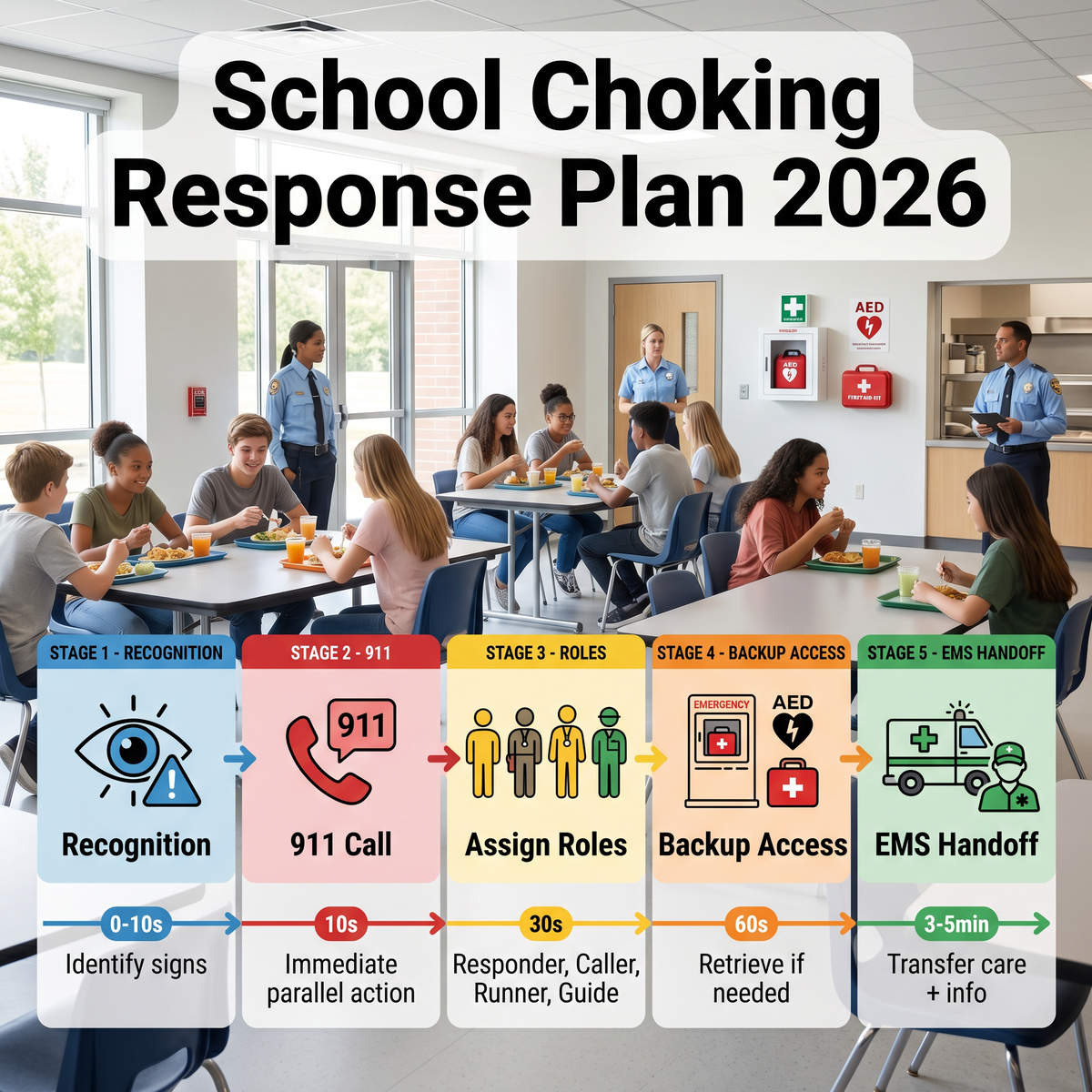
School leaders need one operating framework that a principal, nurse, cafeteria manager, after-school lead, risk manager, finance officer, and district administrator can all use. The plan should connect prevention, recognition, first-line response, backup access, EMS handoff, procurement classification, and funding language into one campus-ready system. School airway safety works best when it is treated as readiness design, not as a simple purchasing task.
Give school administrators, nurses, cafeteria managers, and procurement teams a clearer way to plan prevention, response roles, placement, and day-to-day readiness. Download the School Airway Safety Operations Guide to turn policy language into a usable campus workflow.
|
Question |
Answer |
|
What does school airway readiness actually mean? |
Staff can recognize severe choking quickly, start first-line action right away, reach backup without confusion if standard measures do not work, and hand the scene off cleanly to EMS. |
|
Do airway backup devices replace first-line choking response? |
No. Established first-line choking rescue protocols still come first. A secondary device only fits later in the response chain if standard measures are unsuccessful. |
|
How should districts think about lower-cost readiness purchases? |
Start with current district accounting rules and current state guidance, then decide whether the item fits a non-capitalized supplies or equipment pathway before routing it into a slower capital-style review. |
|
Can state or federal school-safety funding support this kind of work? |
Potentially, but districts should confirm current program rules, allowable costs, and project fit. A stronger case is made when the request is part of a broader readiness plan rather than an isolated equipment purchase. |
|
Why do placement and training need to be discussed together? |
Because a staged resource only helps if trained staff know where it is, when it fits, and how to reach it without losing the room. |
|
Source |
What it supports |
Full link |
|
American Heart Association |
Current choking guidance for conscious children and adults, including repeated cycles of 5 back blows and 5 abdominal thrusts. |
|
|
FDA Safety Communication, March 4, 2026 |
Public guidance stating that established rescue protocols should come first and anti-choking devices may be used as a second option if standard measures are unsuccessful. |
|
|
FDA De Novo Order DEN250012 |
Creation of 21 CFR 874.5400, product code QXN, and the second-line intended use after unsuccessful BLS choking rescue for complete airway obstruction. |
https://www.accessdata.fda.gov/cdrh_docs/pdf25/DEN250012.pdf |
|
California AB 645 chaptered text |
Supports the statement that prearrival medical instructions for airway and choking emergencies require local EMS agency medical director approval and local protocol alignment. |
|
|
Texas Education Agency |
Current FASRG change notices and grant-threshold guidance relevant to capitalization and supplies classification decisions. |
|
|
California Department of Education |
CSAM and audit guidance distinguishing non-capitalized equipment from capitalized equipment. |
https://www.cde.ca.gov/fg/ac/sa/documents/csam2024complete.pdf |
|
California audit guidance |
2025 audit guide language identifying non-capitalized equipment and capitalized equipment object groupings. |
https://www.cde.ca.gov/fg/au/pm/documents/auditguide2025.pdf |
|
COPS Office SVPP |
Federal school-safety program information, including up to 75 percent federal funding and award limits for eligible projects. |
|
|
BJA STOP School Violence |
Program overview describing broader school-safety and violence-prevention grant framework. |
https://bja.ojp.gov/program/stop-school-violence-program/overview |
This article is for educational, engineering, and administrative planning purposes only. It is not legal, medical, or financial advice.School districts should confirm current district policy, state accounting guidance, procurement rules, training requirements, and legal review before making final purchasing or program decisions.
Any airway-clearance device discussed in this article should be treated as a secondary option after unsuccessful standard choking rescue measures, consistent with current FDA public guidance.


