


Introduction: Effective school and care-facility airway safety connects visible equipment, trained people, official guidance, emergency plans, and local requirements.
A school, childcare center, or care facility may already have first-aid supplies, emergency contacts, and written policies. Yet readiness can still break down when equipment is locked away, new employees miss orientation, or staff cannot quickly identify who should respond. The issue is rarely one missing item. It is the gap between equipment, people, information, and daily operations. For safety and operations managers, the useful question is not simply whether an airway clearance device is present. The better question is whether staff can locate the relevant equipment, understand its place in the response system, follow approved instructions, call for professional help, and keep the information current. That is the difference between storing a product and building institutional preparation.
Why Institutional Airway Safety Requires More Than Equipment
Airway emergencies develop in busy environments where several adults may be responsible for different parts of the response. In a school, one staff member may supervise other children while another contacts emergency services and another brings the emergency kit. In childcare, age, size, eating habits, and supervision needs can change the risk picture. In eldercare, residents may have mobility, swallowing, cognitive, or medical considerations that affect how staff respond. Preparation therefore has to support people and decisions, not just provide an object. The CDC’s school preparedness guidance emphasizes planning for children’s specific needs, assigning responsibilities, communicating with families, and coordinating with emergency partners. These ideas apply directly to airway safety preparation. A device placed in a cabinet without a named responsibility may be difficult to use. A trained employee who cannot find the equipment may lose valuable time. A clear storage location without current instructions may create hesitation. Readiness works when each part supports the next one. This is also why a portable anti choking device should be considered within the wider first-aid system rather than treated as a stand-alone answer. Mayo Clinic guidance places choking response within urgent first-aid action and professional emergency support. An institutional plan should therefore connect any airway clearance device with approved first-aid procedures, emergency calling arrangements, incident reporting, and follow-up care. Local rules may also set requirements for staff qualifications, training frequency, equipment storage, documentation, or communication with families. Fitiger’s FoldPumpVac Airway Clearance Device is presented as a foldable 2-Pack for home, travel, school, and care settings, with adult, child, and infant mask visuals and a travel storage bag. Those features make it one possible item for an institution to evaluate, while exact mask suitability, instructions, training requirements, and local compliance should be matched to official materials and applicable rules.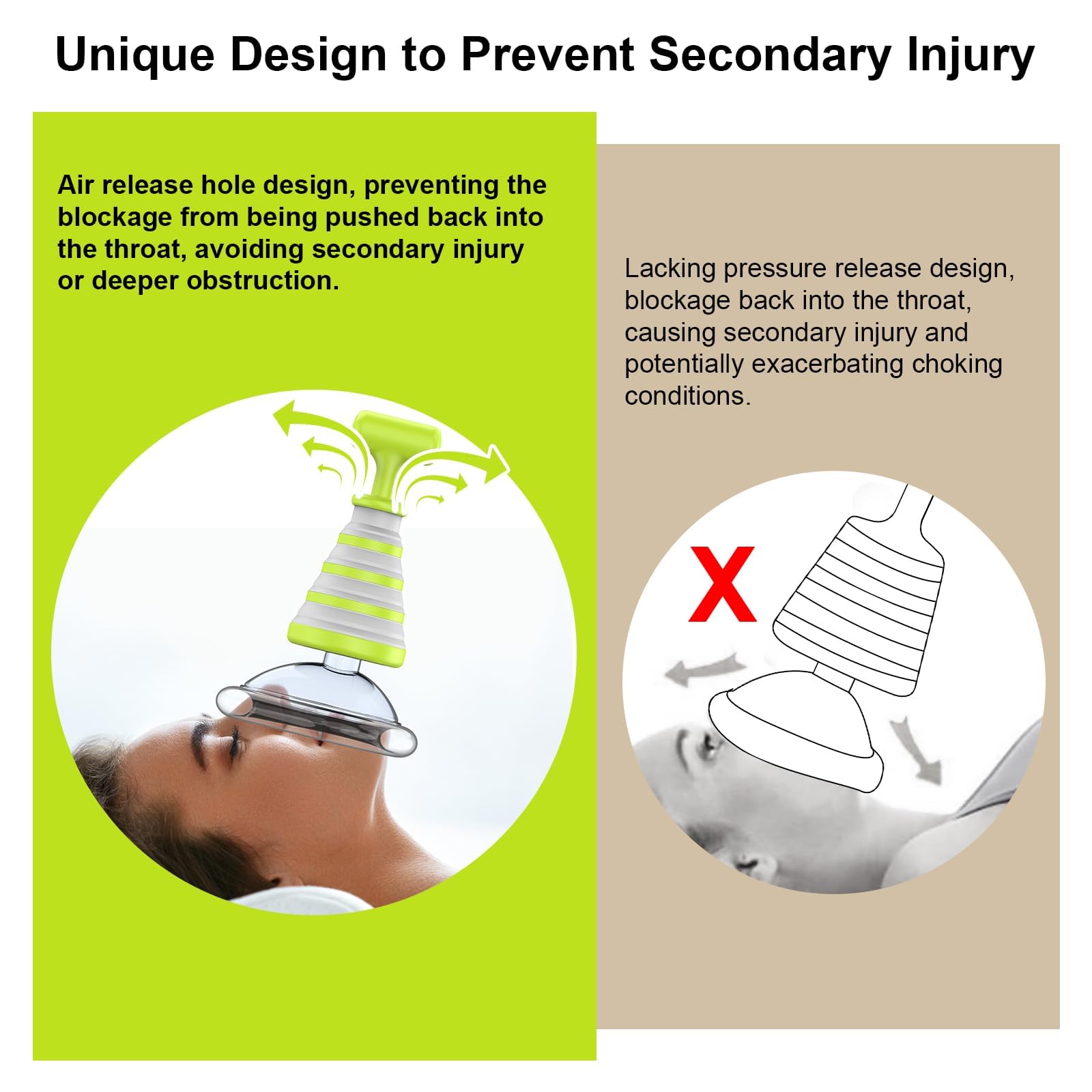
How Staff Roles and Training Materials Support Readiness
A strong plan turns a general safety intention into assigned actions. Managers can define who maintains the emergency plan, who checks equipment access, who coordinates training, and who communicates with emergency responders. These roles may belong to different people, but they should connect through one clearly maintained process. Staff members also need to understand what they are responsible for during an incident and what requires escalation to emergency professionals. Training is most useful when it reflects the real environment. A childcare employee may need child-focused prevention education and clear instructions about supervision. A care-facility worker may need training that fits resident mobility and care needs. A school employee may need to understand how to respond while protecting the rest of the class. HealthyChildren. org highlights the importance of choking prevention education for babies and children, including supervision and age-related awareness. That prevention focus belongs alongside response preparation, not outside it.
1. Visible Equipment Locations Reduce Confusion During Stressful Events
Equipment location is an operational decision, not a decoration choice. Staff should be able to identify the designated location through consistent signs, room maps, emergency boards, or orientation materials. The location should be accessible to the people expected to respond while still being controlled in line with the facility’s safety policy. A device hidden in an administrative office may be technically available but practically distant from a dining area, classroom, activity room, or care unit. The most reliable locations are easy to describe in plain language. “In the marked emergency cabinet beside the dining-room exit” is more useful than “kept with medical supplies. ” Staff should also know whether the equipment moves with a class, care team, vehicle, or activity group. Fitiger’s foldable format and travel bag may support storage in more than one operating environment, but managers should decide placement according to local movement patterns, access rules, and the facility’s emergency plan rather than assuming one storage approach fits every site. Visibility also supports accountability. When equipment has a known home, staff can notice when it has been moved, used, damaged, or removed for cleaning. New employees can learn the location during orientation. Substitute teachers, temporary care workers, and contractors can receive the same basic information without relying on informal memory. This reduces the common problem of a safety item being present in the building but absent from the mental map of the people who may need it.
2. Official Instructions Must Connect With Local Training
A printed instruction sheet, online support resource, or product diagram is useful only when staff know how it fits with their approved training. Product materials may describe device placement, downward pressure, upward pulling, pressure release, or suction-related actions. Those visual elements can help staff recognize the device’s operating structure, but they are not a substitute for complete official instructions, age-specific guidance, or first-aid education. Training should explain three connected points. First, staff need to recognize the emergency and activate the facility’s response process. Second, they need to follow the applicable standard first-aid guidance and the device’s official instructions. Third, they need to understand when to contact emergency services and how to support follow-up care. This keeps a choking rescue device from being misunderstood as a replacement for trained responders or professional medical attention. A useful training program also includes repetition. New employees should receive orientation before working independently. Existing staff should revisit the information during scheduled refresher training or drills. Managers can use short demonstrations, location reminders, scenario discussions, and sign-off records to keep the subject familiar without turning every session into a complex medical course. The exact training format should follow local requirements and the guidance of qualified instructors.
How Emergency Plans Keep Information Current
Emergency plans often become outdated through ordinary operational changes. A classroom moves, a dining area is renovated, staff turnover changes responsibilities, or a new care unit serves people with different needs. If the airway equipment location and response information are not updated at the same time, the written plan and the physical environment can tell different stories. For this reason, airway safety belongs in the same maintenance cycle as other emergency information. When managers review evacuation routes, emergency contacts, first-aid roles, or incident reporting procedures, they can also review equipment access and staff assignments. The goal is not to create a separate document for every device. It is to make sure the relevant information appears where staff already look for emergency guidance. Information maintenance should include the product materials themselves. Institutions can record the product name, storage location, responsible department, official instruction source, training reference, and any replacement or service dates that apply. If a device is moved between rooms, the location map and orientation material should change together. If a mask or other component is replaced, the responsible person should record the update according to facility policy. Registration and reminder services may support this long-term work. Fitiger provides equipment registration and a Protection Plan that includes mask replacement reminders and safety notifications as described in its public materials. Managers should review the terms, regional availability, replacement conditions, and administrative process before relying on those services. They should also maintain their own institutional records rather than depending on an external reminder alone. Childcare and care settings need an additional layer of awareness because the people receiving care may change over time. New children may have different eating risks, and residents may experience changes in swallowing ability, mobility, or supervision needs. HealthyChildren. org supports prevention education for children, while facility-specific care plans and professional guidance address individual needs. The emergency plan should reflect those changing responsibilities without turning a general device description into a personal medical instruction. A practical review asks whether a new employee could find the equipment, whether the assigned responder knows the approved process, whether emergency contacts are current, whether staff education matches the population served, and whether the equipment record reflects its present condition. This is an ongoing management habit, not a one-time installation task.
Conclusion
Institutional airway safety preparation is strongest when equipment, people, instructions, training, emergency plans, and local rules work together. A visible device supports faster recognition; assigned roles reduce hesitation; official materials and qualified training guide action; regular reviews keep the system aligned with real operations. The Fitiger FoldPumpVac 2-Pack can be evaluated as one possible preparation item for school or care settings, with product details and local requirements reviewed before adoption. The lasting value comes from integrating any device into a maintained safety process.
FAQ
Q:Why should schools and care facilities connect airway equipment with staff training?
A:Equipment is useful only when responsible staff know where it is, how its official instructions fit the facility’s first-aid process, and when to seek emergency help. Training also helps staff recognize child-care or resident-specific risks, understand their assigned role, and remain familiar with the equipment after turnover or long periods without an incident.
Q:Where should an airway clearance device be considered within an institutional safety plan?
A:It should be considered as one element of the facility’s broader first-aid and emergency preparedness system. Its location, responsible staff, training reference, emergency contacts, inspection records, replacement information, and local requirements should connect with existing plans for classrooms, dining areas, care units, public spaces, vehicles, and other operating locations.
Q:Can a portable airway clearance device replace standard first-aid procedures in a care setting?
A:No. A portable device should be evaluated as an additional preparation item and used according to its complete official instructions, applicable first-aid guidance, qualified training, and professional direction. It should not replace standard choking response procedures, emergency services, trained responders, or medical follow-up when those are required.
Sources / References
About Children in Disasters | Children & School Preparedness | CDC
Choking: First aid - Mayo Clinic
Choking Prevention for Babies & Children: What Every Parent Needs to Know - HealthyChildren.org


